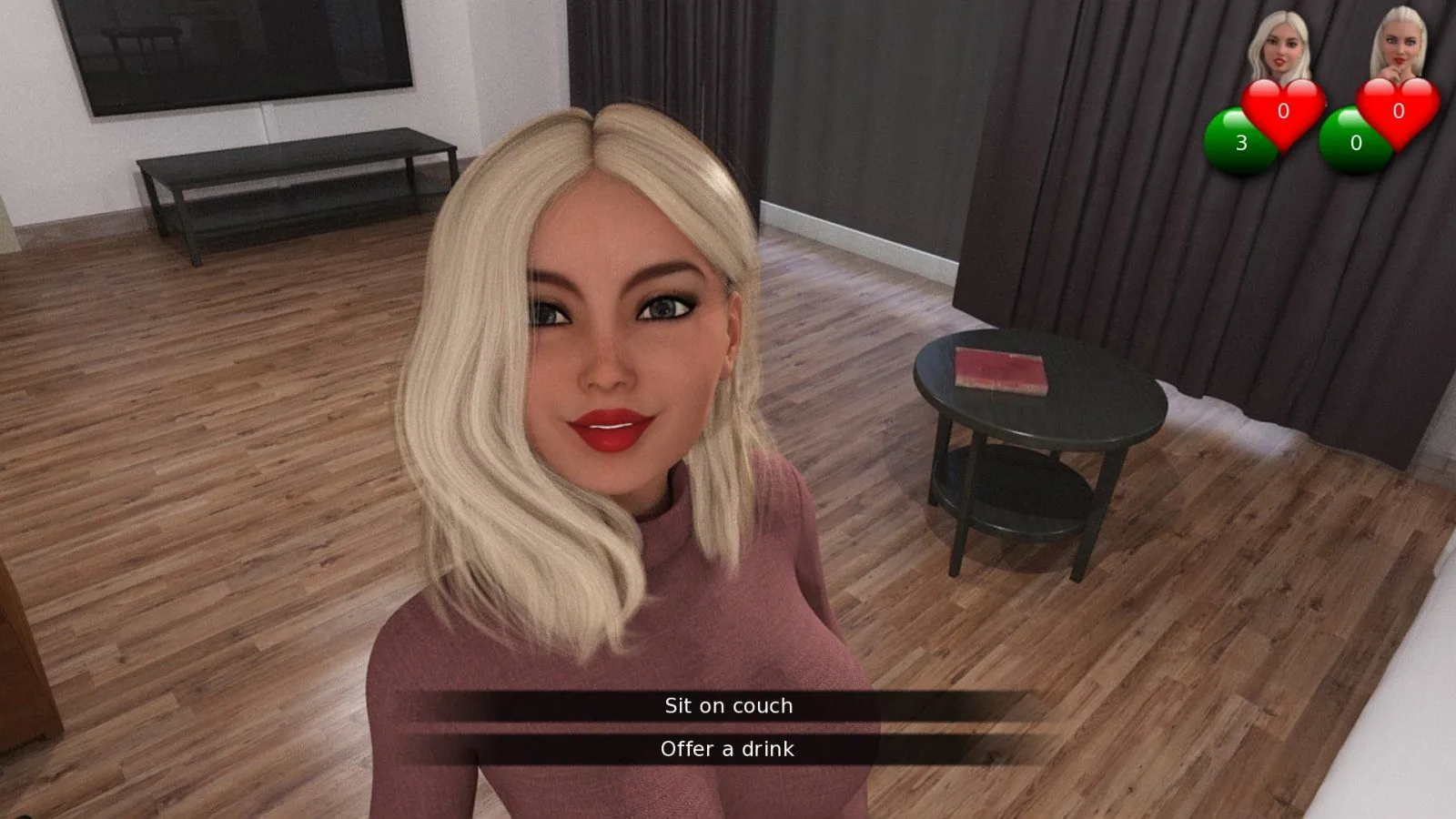
Meeting
Play Meeting
Meeting Screenshots






Meeting review
Master the interactive storytelling, character relationships, and branching narratives that define this immersive experience
Meeting stands out as a sophisticated interactive experience that blends cinematic storytelling with meaningful player agency. Unlike conventional titles in its genre, this game prioritizes genuine character connections and consequence-driven narratives where every dialogue choice shapes your journey. Whether you’re exploring for the first time or seeking to unlock hidden scenarios, understanding Meeting’s core mechanics—from its affinity system to its branching dialogue trees—transforms how you engage with the experience. This guide walks you through everything you need to know to navigate Meeting’s immersive world with confidence and discover the depth that keeps players replaying.
Understanding Meeting: Core Gameplay Mechanics and Features
If you’ve ever clicked on an adult-themed game expecting just shallow interactions and a linear plot, only to be genuinely surprised by the depth of its world, then you already understand the first thing that sets Meeting apart. This isn’t a game where you’re just along for the ride. From the very first decision, you are the author, the director, and the protagonist of a story that bends and fractures based on your whims. 🎭 The core promise of Meeting is one of profound player agency in adult games, built on a foundation of intricate Meeting game mechanics that respect your intelligence and reward your curiosity. Forget about illusions of choice; here, every whispered confidence, every sharp retort, and every silent glance is logged, weighed, and woven into the fabric of your unique narrative.
I remember my first playthrough vividly. I approached a conversation with a co-worker, thinking I was just being politely friendly. A week of in-game time later, I was completely locked out of her story arc, watching from the sidelines as another character stepped into a scene I didn’t even know existed. That was my “aha!” moment. This game wasn’t playing around. It was a complex web of cause and effect, and I was the spider at the center, responsible for every strand. That’s the heart of Meeting’s interactive storytelling gameplay—it’s reactive, consequential, and deeply personal.
What Makes Meeting Different: Interactive Storytelling at Its Core
So, what exactly elevates Meeting from the crowded field? It’s the commitment to a truly branching narrative game experience. Many titles in this genre offer the pretense of choice, with dialogue options that circle back to the same inevitable plot point. Meeting dismantles that concept entirely. Its story isn’t a single path with minor detours; it’s a sprawling tree where major branches lead to entirely different ecosystems of plot, character development, and outcomes.
The magic lies in the synergy between its systems. The dialogue choice system isn’t just a personality quiz; it’s the primary tool for manipulating the hidden affinity system in Meeting. Your exploration of environments isn’t just filler; it’s a treasure hunt for crucial backstory and relationship-altering triggers. The character relationship tracking is so meticulous that characters remember your past actions, altering their dialogue and availability for the rest of the game. This creates an unparalleled sense of immersion—you feel the weight of your decisions because the game world consistently reflects them back at you.
It’s not just about narrative depth, either. The presentation is cinematic, with animations and direction that focus on emotional beats and character nuance rather than just serving a singular purpose. This holistic approach to interactive storytelling gameplay means you’re engaged for the drama, the comedy, the tension, and the relationships first and foremost. The adult elements feel earned and integrated into character arcs, rather than being the sole objective. You’re not just chasing scenes; you’re cultivating stories.
To see this contrast clearly, let’s break it down:
| Feature | Generic Adult Games | Meeting |
|---|---|---|
| Story Depth | Thin pretext to connect scenarios; linear or minimally branching. | Rich, novel-like plots with major branching points that change the story’s core direction and ending. |
| Animation & Presentation | Often basic, functional, focused solely on specific acts. | Cinematic, expressive animations used for character acting, emotional storytelling, and building atmosphere. |
| Player Agency | Limited “choice” that rarely alters long-term outcomes; illusion of control. | Genuine, consequential decision-making where choices permanently lock/unlock content and define relationships. |
| Replay Value | Low; often just revisiting the same linear path. | Extremely High; completely different character routes, plot revelations, and endings await on new playthroughs. |
| Immersion | World feels static, characters are forgettable. | Dynamic world where characters have memory, schedules, and evolving opinions of the player. |
Essential Controls and Navigation Systems
Thankfully, controlling this intricate narrative machine is beautifully simple. Meeting uses an intuitive point-and-click interface that gets out of the way and lets you focus on the people and the story. You’ll spend most of your time in two key modes: dialogue and exploration.
Dialogue Mode is where you’ll live and die by your choices. As characters speak, you click to advance the text. When it’s your turn to respond, a menu of options appears. This is your dialogue choice system in action. The options are rarely just “Good” or “Bad.” Instead, you’ll see a spectrum of tones and intentions:
* Friendly/Supportive: The safe bet to build trust.
* Flirtatious/Charming: Advances romantic tension, but can backfire if used too early or with the wrong person.
* Professional/Neutral: Maintains boundaries, crucial for certain story paths.
* Confrontational/Direct: Can unlock hidden truths or permanently damage a relationship.
Clicking your choice instantly advances the conversation and, unseen to you, adjusts those hidden character relationship tracking meters. There’s no confirmation pop-up asking “Are you sure?”—your decision is final the moment you click, mirroring real-life conversations and amplifying the tension. 😅
Exploration Mode breaks up the conversations and is vital for progression. You’ll navigate environments like office floors, apartments, or city streets. Here, the cursor changes when you hover over interactable items or people. Clicking on a photograph on a desk might trigger a memory or a piece of character backstory. Clicking on a specific person outside of a scripted event might initiate a unique, optional conversation that can boost affinity or reveal a secret.
Pro Tip: Be a digital hoarder! Click on everything. That book on the shelf, the specific drink at the bar, the odd piece of art—in Meeting, environmental storytelling isn’t decoration. I once clicked on a seemingly random plant in a character’s apartment and unlocked a special dialogue option about gardening later that completely changed the tone of a difficult conversation. The game rewards obsessive curiosity.
The structure typically progresses through days or chapters, giving you a mix of scripted narrative events and free time to explore or initiate conversations. Your core goal is always relationship-building, but how you build those relationships—and with whom—is entirely up to you. This seamless blend of dialogue and exploration forms the backbone of the Meeting game mechanics, making you an active participant in the world, not a passive observer.
The Affinity System: How Relationships Shape Your Story
This is where the magic happens, and where Meeting truly separates itself as a masterclass in interactive storytelling gameplay. Beneath the beautiful visuals and engaging dialogue lies the engine of the entire experience: the affinity system. Think of it as a hidden, dynamic spreadsheet tracking every character’s opinion of you. This isn’t a simple “like” meter. It’s a complex set of values that can include trust, respect, romantic interest, and even fear.
Every choice you make in dialogue or action feeds into this system. Choose a supportive line when a character is vulnerable? Their “Trust” and “Friendship” affinity with you rises. Make a sarcastic joke at the wrong time? Their “Respect” affinity might take a hit. Pursue a flirtatious option with one character while in a scene with another? You might boost romance with one while triggering jealousy and lowering affinity with another who is watching. The character relationship tracking is constant and multidimensional.
Let’s look at a real gameplay example that burned a lesson into my brain:
Scenario: Early in the game, you have a lunch break with two co-workers, Lina and Marco. Lina is discussing a stressful family problem. Marco makes a lighthearted, slightly dismissive comment to brush it off.
* Choice A (Support Lina): “That sounds really tough, Lina. I’m here if you need to talk.”
* Choice B (Agree with Marco): “Yeah, don’t worry about it so much! Let’s talk about something else.”
* Choice C (Flirt with Lina): “You’re strong enough to handle anything. I admire that.”
Seems simple, right? Here are the branching consequences:
* Choosing A significantly increases Lina’s Trust and Romantic affinity. However, it slightly decreases Marco’s affinity (he feels chastised). This choice is the only way to unlock Lina’s deeper, more vulnerable story route later. It opens up scenes where she confides in you about her past.
* Choosing B increases Marco’s Friendship affinity, making him a stronger ally in workplace-related plots later. However, it permanently locks you out of Lina’s primary romantic route. She will view you as insensitive and will only interact with you on a superficial, professional level for the rest of the game.
* Choosing C is a high-risk, high-reward move. If Lina’s romantic affinity isn’t high enough yet, this comes off as creepy and lowers her Trust affinity drastically. If it is high enough, it accelerates the romantic path faster than Choice A. Meanwhile, Marco’s reaction could range from amused to annoyed, depending on his affinity with you.
This single, seemingly minor lunch conversation can redirect the entire narrative flow of your game. That is the power of a genuine branching narrative game. There is no “right” answer, only the answer that leads to the story you want to experience (or accidentally stumble into!).
The system is brilliantly opaque. You don’t see numerical values or meter bars (usually). You receive feedback through the characters’ immediate reactions, their future dialogue, their availability for events, and ultimately, the scenes and endings that become available to you. This lack of a UI element actually enhances the realism and tension. You have to read people, just like in real life.
Mastering Meeting means understanding that every interaction is a building block. A series of friendly choices builds a foundation of trust necessary for a character to later accept a flirtatious advance. A professional demeanor might be required to earn a promotion sub-plot that then gives you access to a whole new social circle. The affinity system in Meeting is the invisible hand that guides your unique journey through its world, ensuring that no two playthroughs tell the same story. It’s a profound testament to the potential of player agency in adult games, proving that the genre can be a vehicle for some of the most nuanced and reactive storytelling in gaming. Your story in Meeting is truly, completely, your own. ✨
Meeting represents a thoughtful evolution in interactive adult gaming, where meaningful choices, emotional depth, and genuine character connections take center stage. From its sophisticated affinity system to its branching narratives with multiple endings, the game rewards players who invest time in understanding its mechanics and exploring different dialogue paths. The combination of cinematic animation, immersive sound design, and consequence-driven storytelling creates an experience that respects both player intelligence and emotional investment. Whether you’re drawn to the sci-fi narrative framework, the diverse character interactions, or the satisfaction of unlocking hidden scenarios, Meeting offers substantial replay value and personalized journeys. Start by experimenting with different dialogue tones, pay attention to how your choices ripple through relationships, and don’t hesitate to replay scenes to discover alternative outcomes. Your engagement with Meeting’s systems directly shapes the story you experience, making each playthrough uniquely yours.