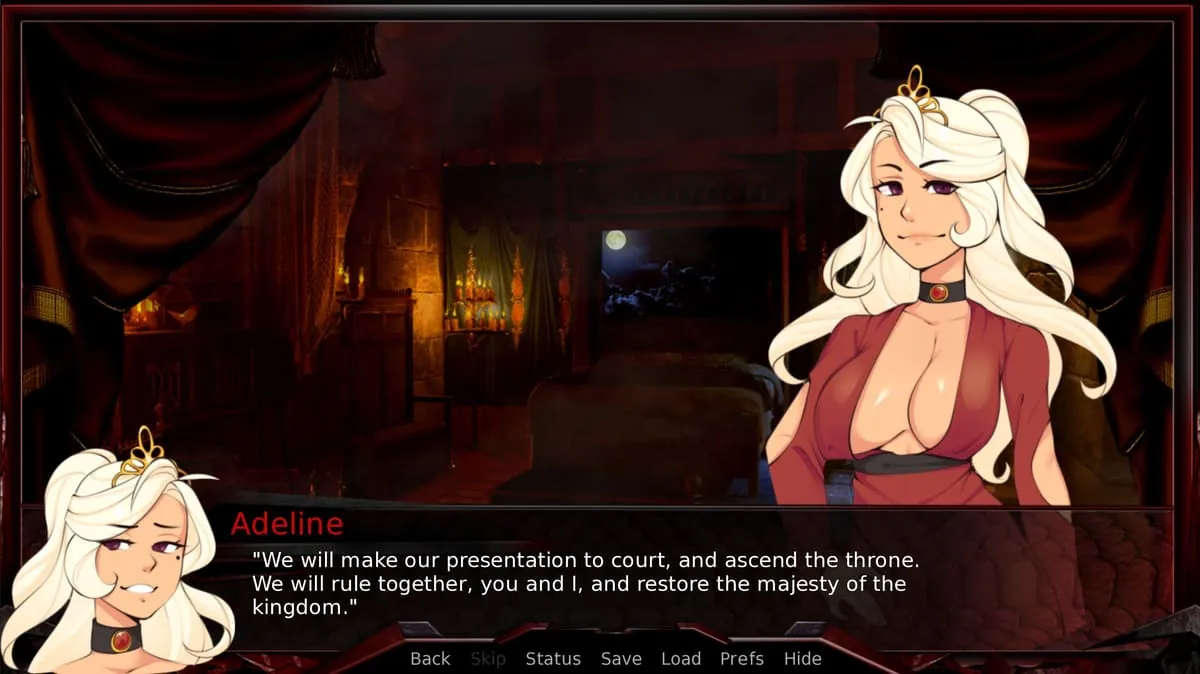
Meeting
Play Meeting
Meeting Screenshots






Meeting review
Master the branching narratives, character interactions, and immersive mechanics that make Meeting stand out
Meeting represents a significant evolution in interactive adult gaming, blending cinematic storytelling with meaningful player agency. Unlike traditional adult games that rely on passive observation, Meeting immerses you in a dynamic world where every dialogue choice, gesture, and decision shapes your relationships and unlocks unique story paths. Whether you’re exploring the game for the first time or seeking to maximize your playthrough, understanding its core mechanics—from the sophisticated affinity system to its branching narratives—transforms your experience from casual entertainment into a deeply personalized journey. This guide explores what makes Meeting a standout title, covering everything from its innovative gameplay systems to practical strategies for uncovering hidden content and multiple endings.
Understanding Meeting: Core Gameplay Mechanics & Story Structure
Ever feel like you’ve seen it all in adult gaming? 😴 You know the drill: static visuals, a linear path that funnels you toward a pre-determined outcome, and choices that feel about as meaningful as a coin flip. It can leave you wondering if your input even matters. If that sounds familiar, prepare to have your expectations completely rewritten.
Meeting isn’t just another title on the shelf; it’s a paradigm shift. At its heart, this is a branching narratives interactive experience wrapped in a compelling sci-fi mystery. Your role isn’t to passively watch a story unfold, but to actively live it, build it, and shape its outcome through every conversation and decision. The core Meeting gameplay mechanics are designed to make you feel the weight of your presence in this world, where connection is the ultimate resource and every interaction is a building block for your future.
This guide will break down exactly how Meeting achieves this unparalleled depth. We’ll explore the dialogue tree system that serves as your primary tool, decode the sophisticated affinity system adult game that works behind the scenes, and show you how mastering relationship tracking game mechanics is the real key to how to unlock scenes Meeting. Forget illusionary choice—this is about genuine player agency adult simulation.
What Makes Meeting Different From Traditional Adult Games
Let’s be blunt: many games in this genre treat narrative as a simple obstacle course on the way to a reward. Meeting flips that script entirely. Here, the narrative is the reward, and the journey of relationship-building is the core game. It’s the difference between reading a choose-your-own-adventure book and being given a pen to write your own novel alongside compelling characters.
I remember my first playthrough. Early on, I met Lyra, an astro-botanist who was clearly stressed about her failing ecosystem pods. In a generic game, I might have had two options: “Comfort her” or “Make a pass.” Meeting presented me with four nuanced paths: I could offer practical engineering help, make a witty joke to lighten the mood, express genuine empathy for her loss, or professionally suggest filing a maintenance report. I chose empathy. That single decision didn’t just trigger a nice animation; it began a dedicated story thread where Lyra later trusted me with a deeply personal secret about her past, a thread completely absent for players who chose the professional or flippant routes.
This is the Meeting difference. Your choices carve permanent grooves in the story’s landscape. To visualize this stark contrast, let’s break it down:
| Feature | Traditional Adult Games | Meeting |
|---|---|---|
| Story Depth | Often thin, linear, or purely setup-based. | Rich, novel-like **branching narratives interactive** with overarching sci-fi themes about isolation and connection. |
| Animation & Scenes | Frequently the sole focus, sometimes disconnected from story. | High-quality, narrative-integrated moments that feel earned as culminations of relationship arcs. |
| Player Agency | Illusion of choice; decisions rarely alter long-term outcomes. | Meaningful **player agency adult simulation** where every dialogue choice feeds into complex reputation and relationship systems. |
| Replay Value | Low; often just replaying for different static scenes. | Exceptionally high, with multiple distinct endings, character-specific routes, and hidden scenarios based on affinity. |
| Immersion Factor | Player is often a spectator. | Player is the protagonist whose personality and relationships directly define the available story. |
The game is structured around a “day” or “chapter” system, but your core objective is never just to reach the next day. It’s to deepen your bonds, uncover character secrets, and navigate the delicate social ecosystem of a deep-space vessel. The sci-fi setting isn’t just a backdrop; it amplifies the core questions of the game: In the vast emptiness of space, what does it mean to truly connect with another person? Your journey provides the answer.
The Dialogue Tree System and Player Agency
Forget multiple-choice quizzes. Meeting’s dialogue tree system is your character’s voice, your personality modulator, and your strategic relationship tool, all in one. This is the primary engine of player agency adult simulation. Every conversation is a branching path where your selected tone and topic have immediate and long-term consequences.
The system typically presents you with three to four options that reflect distinct attitudes:
* Friendly/Supportive: Builds trust and platonic affinity.
* Flirtatious/Charming: Advances romantic tension and signals your interest.
* Professional/Logical: Earns respect and can unlock technical or mission-related subplots.
* Confrontational/Blunt: Creates drama, tests boundaries, and can lead to entirely unique, conflict-driven story arcs.
Here’s the crucial part: these aren’t just labeled “Good,” “Neutral,” and “Bad.” The “best” choice is entirely dependent on the character you’re speaking to and your desired outcome. A sarcastic joke might delight the quick-witted communications officer but offend the stoic chief of security. The game doesn’t judge your choice as right or wrong; it processes it as a data point in that character’s evolving model of you.
🎯 Pro Tip: Pay close attention to character bios and prior conversations. They drop subtle hints about personalities and past traumas. Choosing a dialogue option that aligns with a character’s known values is the fastest way to build deep affinity.
To master the Meeting gameplay mechanics, you need to understand the core tools at your disposal:
- The Dynamic Dialogue Tree: Options can appear, disappear, or change based on your prior knowledge, completed tasks, and current reputation with the character. Asking about someone’s family before they’ve told you they have one might yield a cold, locked response.
- The Silent Affinity Engine: Behind every choice, a hidden affinity system adult game is calculating. A flirtatious line might add +2 “Romantic” points but -1 “Professional” points with that character.
- Scene & Exploration Triggers: Certain dialogue choices are keys. Asking the right question or offering the right kind of support can unlock optional location visits or private invitations that drive the plot forward.
- Story Progression Gates: Major narrative branches are locked behind affinity thresholds. You cannot pursue a romantic confession with a character unless your hidden “Romantic Affinity” with them is high enough, a perfect example of how to unlock scenes Meeting through consistent character engagement.
Let me give you a concrete case study from my playthroughs. With the character Kaelen, the ship’s enigmatic historian, I discovered a pivotal moment in Chapter 4. He was debating the ethics of an ancient alien artifact. My options were:
1. “The pursuit of knowledge justifies the risk.” (Professional/Ambitious)
2. “Some history is better left buried.” (Cautious/Empathetic)
3. “What are you really afraid of finding?” (Confrontational/Intimate)
Choice #1 aligned with his professional side but ignored his personal anxiety. Choice #2 showed empathy and safety. Choice #3 was a high-risk, high-reward option that challenged him. I chose #3, unlocking a vulnerable confession about his past failures that became the foundation for his entire romantic route. In another playthrough, choosing #1 kept our relationship cordial but distant, locking me out of his most personal scenes entirely. This is player agency in action—your words directly author the story’s possibilities.
Relationship Tracking and the Affinity System
So, how does the game remember all of this? How does it track whether you’re a charming confidant or a brash interrogator across dozens of interactions? Welcome to the genius of Meeting’s affinity system adult game. This isn’t a single, visible “love meter.” It’s a sophisticated, multi-dimensional relationship tracking game mechanics suite operating beneath the surface.
Think of it as a private dossier each character holds on you. It doesn’t just track “how much” they like you, but in what way they like you. Common hidden affinity dimensions include:
* Romantic Affinity: Your cumulative flirtatious and intimately supportive choices.
* Trust Affinity: Built through keeping secrets, offering reliable help, and choosing empathetic options.
* Professional Respect: Earned by solving problems logically, contributing to the ship’s mission, and demonstrating competence.
* Conflict/Fear: A unique track that can rise through aggressive or manipulative choices, leading to tense, dramatic paths.
These values are never spoon-fed to you. You have to read the characters—their reactions, their follow-up dialogue, the new options that become available. When the chief engineer starts sharing her personal dreams for the ship’s engine without you asking, your Trust Affinity is high. When the medic offers you a private nightcap after your physical, your Romantic Affinity has hit a key threshold.
This system is the absolute core of how to unlock scenes Meeting. Every intimate scene, every heartfelt confession, every special mission, and every ending is gated behind reaching specific combinations and levels of these hidden affinities.
| Your Goal (How to Unlock Scenes Meeting) | Required Affinity Focus | Practical Dialogue Strategy |
|---|---|---|
| Romantic Ending with a Character | Very High Romantic Affinity + High Trust Affinity. | Consistently choose flirtatious options that are also supportive. After a shared vulnerable moment, follow up with a caring, intimate dialogue choice. |
| A Character’s Deepest Personal Secret | Exceptionally High Trust Affinity. | Always be a vault. If they share a worry, choose protective/empathetic responses. Never use their disclosures against them in later arguments. |
| A “Professional Partnership” Ending | Very High Professional Respect + Moderate Trust. | Focus on solving their practical problems, discuss ship business, and choose efficient, logical solutions over emotional ones. |
| A Unique “Conflict-Driven” Scene | High Conflict/Fear Affinity. | Regularly challenge their views, pick blunt or aggressive options, and create narrative tension. This can unlock passionate argument scenes that are otherwise inaccessible. |
The true magic—and the source of incredible replay value—is that these affinities are often mutually exclusive in a single playthrough. You cannot maximize Romantic and Professional affinity with the same character simultaneously; your actions define the nature of your relationship. This means that on your second, third, or fourth playthrough, making different core personality choices in the dialogue tree system doesn’t just change a few lines—it can reroute you to a completely different character arc, revealing new backstory, new conflicts, and new intimate moments you never knew existed.
Mastering Meeting is about embracing this depth. It’s about listening, observing, and deciding who you want to be in this story. Your player agency adult simulation is real, recorded in intricate detail by the game’s relationship tracking game mechanics, and rewarded with some of the most satisfying, earned, and narrative-rich moments the genre has to offer. Stop playing a story. Start writing your own. ✨
Meeting stands as a transformative experience in interactive adult gaming, distinguished by its commitment to meaningful storytelling and genuine player agency. The game’s sophisticated systems—from its dynamic dialogue trees to its hidden affinity tracking—create an environment where your choices genuinely matter, offering exceptional replay value through multiple endings and hidden scenarios. By understanding how the relationship system works, mastering dialogue options, and recognizing how your decisions ripple through the narrative, you unlock the full potential of Meeting’s immersive world. Whether you’re drawn to the sci-fi narrative framework, the diverse cast of characters, or the psychological depth woven throughout, Meeting delivers an experience that respects both your intelligence and your time. Start your journey today and discover why players consistently praise Meeting for blending erotic tension with genuine emotional connection.