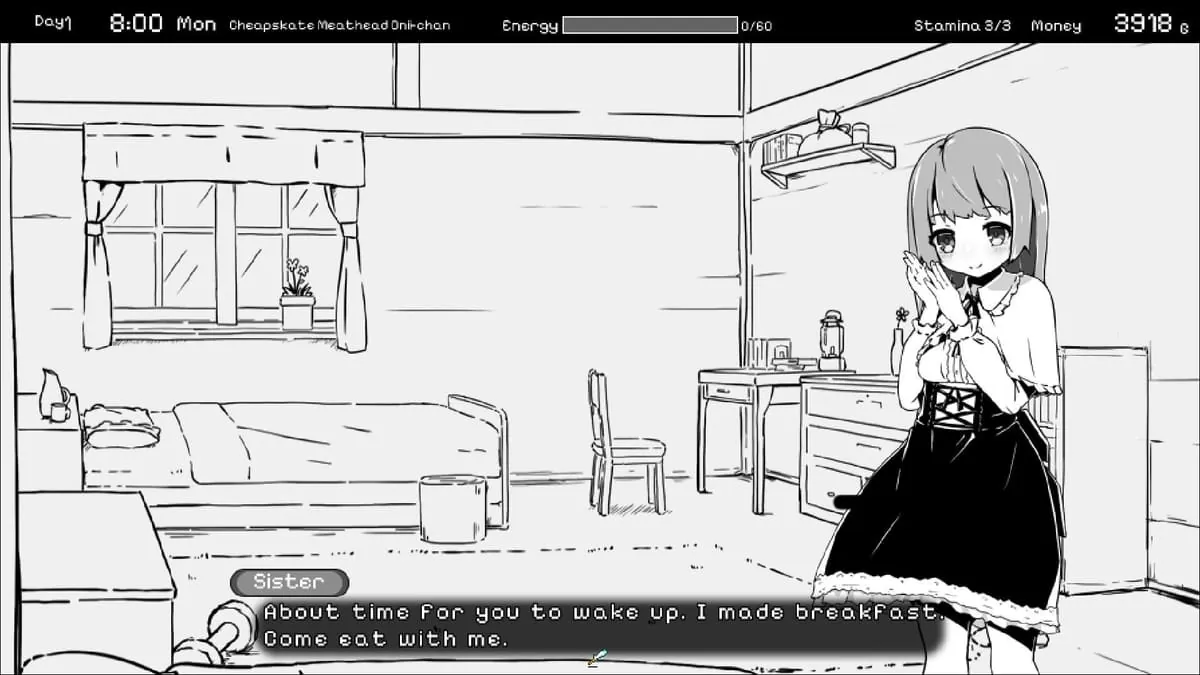
Annie’s School Days
Play Annie’s School Days
Annie’s School Days Screenshots

















Annie’s School Days review
Explore how micro-decisions shape your high school experience in this narrative-rich adventure
Annie’s School Days stands out as a time capsule of teenage chaos where player choice and game mechanics blend seamlessly. Unlike traditional games with obvious good or bad endings, this title features butterfly effect mechanics that make even skipping homework assignments lead to unlocking secret clubs or alienating your crush. The game’s dynamic relationship system, time management mechanics, and hidden mini-games create a deeply interactive storytelling experience where every decision matters. Whether you’re ruling the student council or organizing a rebellion against it, your choices shape the narrative in ways that demand multiple playthroughs to fully explore.
Understanding Annie’s School Days: Gameplay Mechanics & Core Features
Remember those old games where a “big decision” every few hours would let you pick a red door or a blue door, and everything else was just filler? 🚪 Annie’s School Days throws that rulebook out the window. This isn’tt just a choice-driven narrative game; it’s a living, breathing ecosystem where your smallest actions send ripples through the entire school year. 🦋 Every interaction, every glance, every “yes” or “no” is a thread woven into a unique tapestry that is your story, and mine. Let’s dive into what makes the Annie’s School Days gameplay mechanics so uniquely compelling.
What Makes the Butterfly Effect Mechanics Revolutionary 🦋
The heart of Annie’s School Days is a system where tiny, almost forgettable moments can blossom into game-changing consequences. We’re not just talking about major plot forks here. This is about the micro-moments: who you sit with at lunch on Tuesday, whether you help a classmate pick up their dropped books, or if you choose to doodle in the margins of your notebook instead of listening. These are your butterfly effect game choices.
The game has a relentless memory. It logs your micro-decisions in a hidden web of cause and effect. A choice that seems purely social in Week 1 might unlock a critical skill check or narrative path in Week 10. The developers have crafted a world where nothing happens in a vacuum, forcing you to engage with a truly interactive storytelling mechanics approach.
The game gives you no “undo” button. You save your progress, not your conscience. You have to live with the outcomes, just like real life.
Let me share a story from my first playthrough. Early on, I was laser-focused on acing my exams. When a shy art club member, Leo, nervously asked for help finding his missing sketchbook, I brushed him off. “Sorry, big history test tomorrow!” I said. Fast forward two months: I’m trying to gather evidence on the principal’s suspicious behavior, and I need someone who can discreetly sketch a layout of the forbidden admin wing. The perfect person? Leo, now a confident artist who trusts exactly none of the popular kids who ignored him. Because I’d dismissed him earlier, that door was firmly closed. My short-term academic gain cost me a key ally in a major storyline. That’s the butterfly effect game choices in action—a small, seemingly unrelated decision echoing loudly down the line.
This philosophy extends to every corner of the game. For instance, joining the debate team isn’t just an extracurricular; it’s a skill tree. It slowly unlocks new, more persuasive dialogue options across all your social interactions. Conversely, consistently skipping Mr. Donovan’s history class might save you time initially, but you’ll miss his off-hand stories that contain vital clues about the school’s founding—clues essential for solving a central mystery later.
To illustrate how these systems intertwine, here’s a look at how two early-game decisions can diverge:
| Your Choice | Short-Term Effect | Potential Long-Term Consequence |
|---|---|---|
| Join the Debate Team | Lose two after-school time slots per week. Unlock “Persuasive Logic” mini-game. | Gain “Silver Tongue” trait. Unlock unique dialogue to peacefully resolve conflicts, persuade the student council, or ace a critical interview for a scholarship subplot. |
| Repeatedly Skip History Class | Gain free time for other activities. Risk lower grade. | Miss lore about the old school wing. Be locked out of the “Historian’s Secret” questline. Mr. Donovan refuses to write you a crucial recommendation letter later. |
Dynamic Relationship System: How Characters Remember Your Choices 👥
If the butterfly effect is the engine, the dynamic relationship system is the soul. Characters in Annie’s School Days are not quest dispensers with reset buttons. They have moods, memories, and evolving opinions of you. Every interaction contributes to a hidden relationship score that affects their future behavior, dialogue, and willingness to help.
This system means characters react authentically. If you constantly bail on plans with your best friend Maya to hang with the cool crowd, she won’t just have one sad line of dialogue and reset. She’ll become distant. Her dialogue options will shrink. When you finally need her support during a family crisis subplot, she might be “too busy,” and you’ll have to work to rebuild that trust. This creates a deeply choice-driven narrative game experience where your social capital is your most valuable currency.
The system tracks everything:
* Promises Kept/Broken: Tell someone you’ll meet them after school? Your reliability stat is on the line.
* Secrets Shared/Revealed: If you gossip about a character’s secret, word gets around. They will confront you.
* Allegiances: Publicly supporting one faction (e.g., the tech club in their feud with the newspaper) will endear you to some and alienate you from others.
This creates incredible branching storylines gameplay. In one playthrough, you might be the beloved president of the student body with a tight-knit group of friends. In another, you could be a lone wolf detective, trusted only by a couple of outcasts because you burned too many bridges. The characters make you feel these consequences, which is the hallmark of a powerful dynamic relationship system.
Time Management & Balancing School Life Decisions ⏰
At its core, Annie’s School Days is a brilliant time management school game. Each in-game day presents you with a limited number of time blocks: before school, lunch, after school, and evening. How you spend them defines your path. This isn’t just busywork; it’s the primary vessel for your butterfly effect game choices.
You cannot do everything. This is the game’s central, beautiful tension. Do you:
* Use your lunch to study in the library, boosting your Math grade?
* Sit with the drama club, deepening your friendship with them?
* Explore the old gym, potentially finding a hidden collectible diary page that reveals backstory?
Every block is an opportunity cost. The Annie’s School Days gameplay mechanics force you to define your priorities, and the game reacts. Neglect your schoolwork, and teachers will call home, limiting your freedom. Ignore your friends, and you’ll find yourself without allies. Skip your part-time job at the café, and you won’t have cash for new clothes or event tickets that open up new story beats.
The genius is how this management ties into everything else. That time you spent “wasting” an afternoon helping the janitor clean up a spill? That might unlock his trust, allowing you to borrow a master key later. The game rewards curiosity and punishes single-minded obsession. My practical advice? Treat each day like a puzzle. Look at your long-term goals (unlock a skill, solve a mystery, befriend a character) and work backward to spend your time wisely. Sometimes, the most productive thing you can do is “nothing”—just hang out and listen, as those moments often yield the richest character insights and hidden quest triggers.
This structure also houses delightful hidden mini-games that are seamlessly tied to the narrative. Succeeding at the debate mini-game builds your persuasion stat. Doing well in a chemistry lab practical is a puzzle that rewards you with crafting ingredients for later use. Even the part-time job at the cinema has a ticket-stub sorting mini-game that, if mastered, leads to a promotion and new narrative options.
Ultimately, the interactive storytelling mechanics of Annie’s School Days create a powerful illusion of life. Your story is built from hundreds of tiny, meaningful decisions that shape your relationships, your skills, and your destiny at Willow Creek High. The branching storylines gameplay ensures that no two stories are the same, making each playthrough a personal journey. It’s a game that understands that high school isn’t about the big speeches or the dramatic prom night—it’s about the quiet moments in between, and how they all add up to the person you become. 🎓✨
Annie’s School Days delivers a unique gaming experience where every decision carries weight and consequence. The butterfly effect mechanics ensure that no two playthroughs feel identical, encouraging players to explore different paths and discover how small actions shape big outcomes. With its dynamic relationship system, time management challenges, and rewarding exploration, the game creates an immersive high school narrative that respects player agency. The nostalgic ’90s anime art style combined with modern polish creates a compelling visual experience that draws players into its branching storylines. Whether you’re managing friendships, balancing academics, or uncovering hidden secrets, Annie’s School Days proves that interactive storytelling can create meaningful, personalized experiences that keep players coming back for more.